
- English
- Español
- Português
- русский
- Français
- 日本語
- Deutsch
- tiếng Việt
- Italiano
- Nederlands
- ภาษาไทย
- Polski
- 한국어
- Svenska
- magyar
- Malay
- বাংলা ভাষার
- Dansk
- Suomi
- हिन्दी
- Pilipino
- Türkçe
- Gaeilge
- العربية
- Indonesia
- Norsk
- تمل
- český
- ελληνικά
- український
- Javanese
- فارسی
- தமிழ்
- తెలుగు
- नेपाली
- Burmese
- български
- ລາວ
- Latine
- Қазақша
- Euskal
- Azərbaycan
- Slovenský jazyk
- Македонски
- Lietuvos
- Eesti Keel
- Română
- Slovenski

What is a commode wheelchair?
For individuals with limited mobility, a chair that combines both mobility and toileting functions can preserve their essential dignity and independence.
Amidst the rapid development of the global rehabilitation equipment market, commode wheelchairs—a unique product—are quietly transforming the daily lives of millions with limited mobility. This innovative device, skillfully integrating wheelchair and toilet functions, has become an indispensable part of the rehabilitation and nursing landscape.
Industry data indicate a steady growth trend in the rehabilitation equipment market. As a key category within daily assistive living devices, the demand for commode wheelchairs continues to rise alongside the trend of population aging.
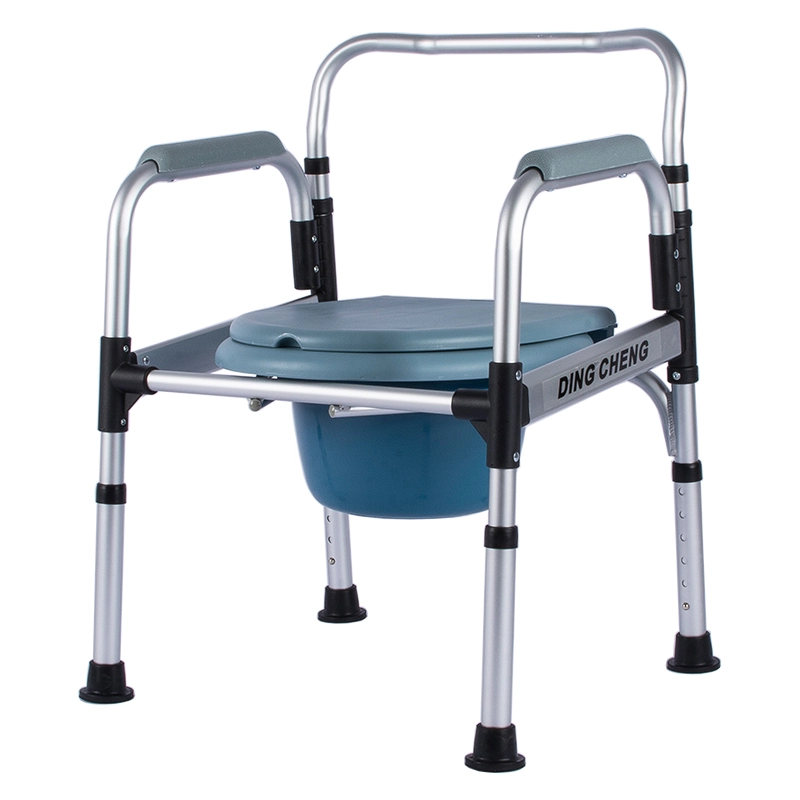
01 Understanding Commode Wheelchairs: A Perfect Blend of Function and Design
A commode wheelchair, simply put, is an assistive device that merges the functions of a standard wheelchair with those of a toilet. Its original design purpose was to assist individuals who face difficulties with movement and transfers.
The standout feature of this device is that it allows users to fulfill toileting needs without leaving the wheelchair, significantly reducing caregiving challenges and the risk of accidents. From a design perspective, commode wheelchairs typically include a detachable commode pan, adjustable armrests, and anti-slip wheels. The frame is often made of lightweight yet high-strength materials, ensuring load-bearing capacity while facilitating easy movement.
In practical use, commode wheelchairs demonstrate strong adaptability. They are not only suitable for bedrooms but can also be easily wheeled into bathrooms. Some models, with special design features, can even be used in conjunction with standard toilets, covering a wider range of usage scenarios.
02 Design Highlights and User Experience
The design of commode wheelchairs fully considers the actual needs of users, showcasing several notable features:
Flexible Mobility: Unlike fixed commodes, commode wheelchairs are equipped with swivel wheels for easy movement between rooms. The foldable design of some models further enhances storage and transport convenience.
Functional Integration: Successfully combines mobility and toileting functions into a single device. Some advanced models even integrate bathing capabilities, achieving true multifunctionality.
Safety Assurance: Considering the instability of users with limited mobility, these wheelchairs are generally outfitted with non-slip foot pedals, locking casters, and adjustable armrests—effectively reducing fall risks during use.
Hygiene and Comfort: Most models feature padded seats and ergonomic designs, ensuring comfort during prolonged use. The removable commode pan design also simplifies cleaning, maintaining hygiene standards.
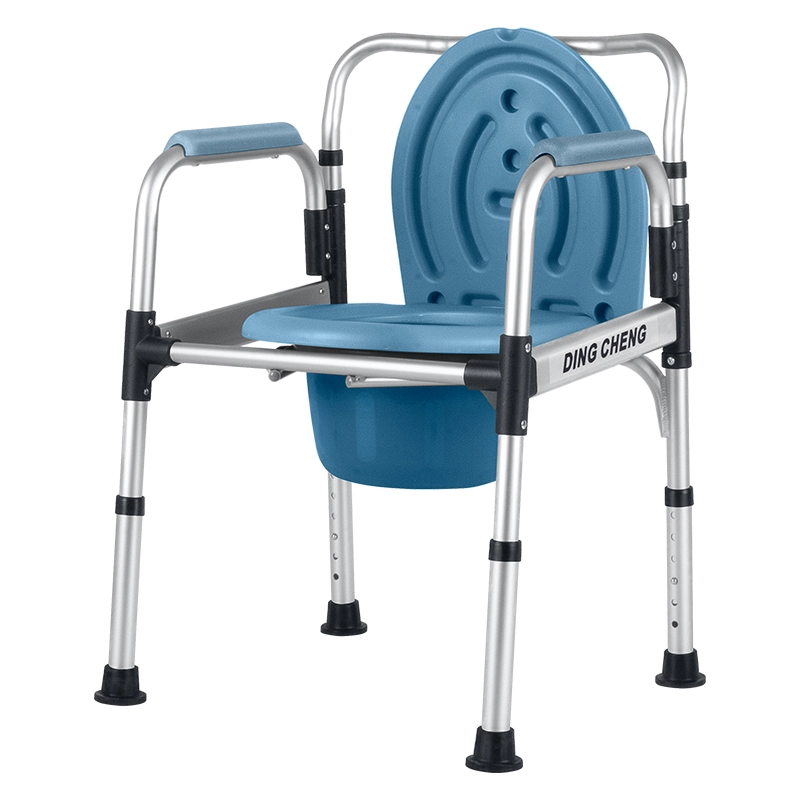
03 Product Spotlight: Disabled Aluminum Commode Wheelchair
Among numerous similar products, the Disabled Aluminum Commode Wheelchair exemplifies the mature design of this category:
This product uses aluminum alloy material, achieving an optimal balance between lightweight construction and structural strength. Its leg components offer multiple height adjustment levels, comfortably accommodating users of different statures.
Employing a versatile 2-in-1 design, it functions effectively as both a shower chair and a commode chair. Its excellent load-bearing capacity and non-slip straight foot pedals ensure stability during use. With overall dimensions of 61.5 x 41 x 77.5-90 cm (L x W x H) and a net weight of only 5.5 kg, it is both lightweight and sturdy. Suitable for placement in bathrooms, bedrooms, or hospital rooms, it offers exceptional flexibility.
04 Industry Trends and Development Directions
The innovation progress of commode wheelchairs closely aligns with the overall development of rehabilitation assistive devices, with several clear trends currently emerging:
Technology-Driven Innovation: The rehabilitation equipment industry is experiencing a wave of technological advancement, with intelligent systems and humanized design concepts increasingly being incorporated into new products.
Growing Demand for Home Care: More patients and caregivers are opting for home-based care models, driving demand for easy-to-use assistive devices. Commode wheelchairs effectively meet this need, helping patients maintain independence in home environments.
Personalized Rehabilitation Solutions: Future rehabilitation equipment will place greater emphasis on personalized adaptation. Through customizable configurations and modular designs, products can better meet individual user requirements.
Regional Market Development: North America currently holds the largest share of the global rehabilitation equipment market, while the Asia-Pacific region shows the most promising growth potential, closely linked to the continuous improvement of local healthcare systems.
05 Target Users and Application Value
Commode wheelchairs primarily serve several specific user groups:
Elderly Population: Older adults with reduced mobility due to aging or conditions like osteoarthritis. These wheelchairs provide necessary support and safety assurance during toileting.
People with Disabilities: Individuals with mobility impairments due to congenital or acquired conditions, who require assistance with daily toileting to reduce dependence on others.
Post-Surgical/Injury Patients: Those in recovery from procedures, trauma, or illness, especially with lower limb movement restrictions, who need commode wheelchairs during rehabilitation.
Neurological Patients: Individuals with paralysis or limited mobility due to stroke or brain injury, who often require such devices for daily living activities.
For these groups, the value of commode wheelchairs extends beyond functionality to psychological benefits—they enhance users' sense of independence and self-esteem, providing greater autonomy in personal hygiene management.
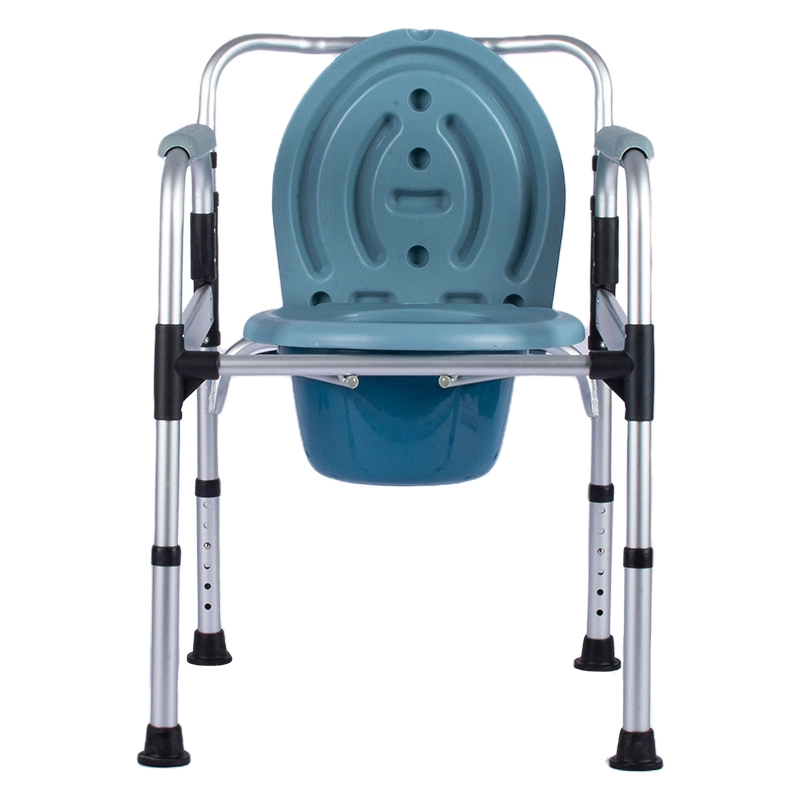
| Comparison Aspect | Commode Wheelchair | Standard Commode |
| Mobility | Equipped with wheels for high mobility, allowing free movement between different spaces. | Typically fixed in place, requiring the user to move to the device themselves or with assistance. |
| Core Functionality | Multifunctional and all-in-one; can be used both as a mobility aid and a toileting device. | Relatively single-purpose functionality, primarily used for toileting. |
| Usage Scenarios | Adapts to various environments, including homes and medical institutions, offering versatile application. | Mainly suited for fixed-location use in home settings. |
| Price Range | Generally higher priced due to more complex design and integrated functions. | Simpler structure makes it more affordable, suitable for different budgets. |